Which Vehicles Count Toward Your UCR Bracket
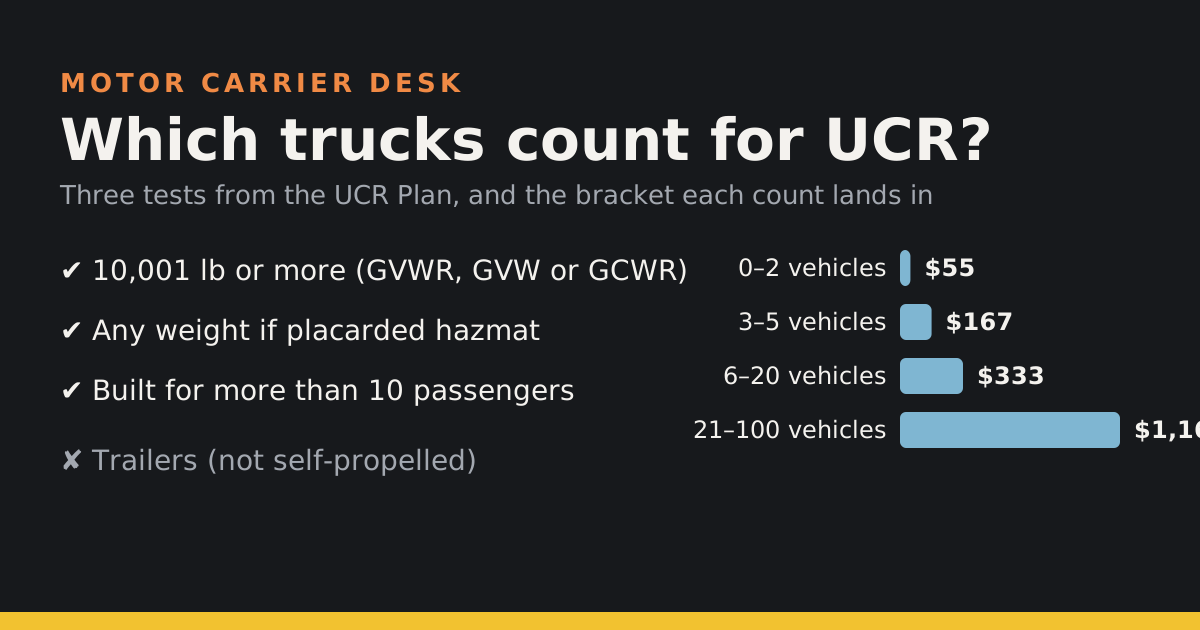
Because the UCR fee is set entirely by bracket, the only arithmetic that matters is the vehicle count, and the UCR Plan defines that count precisely. The basis is total commercial motor vehicles operated during the preceding year. A vehicle is a commercial motor vehicle for this purpose if it is self-propelled, used on highways in commerce principally to carry passengers or cargo, and meets any one of three tests:
- Self-propelled vehicle used on highways in commerce, principally to carry passengers or cargo, with GVWR, GVW or GCWR of at least 10,001 lb
- Any weight, if carrying placarded hazardous materials
- Designed to carry more than 10 passengers including the driver
What falls out of that definition
- Trailers are not self-propelled and never count, however many you own.
- Light vehicles under 10,001 lb GVWR count only if they carry placarded hazmat or seat more than 10 — a pickup running interstate for a contractor does not count unless it tows a combination rated over 10,001 lb.
- Combinations are judged on gross combination weight rating, so a 9,000 lb pickup with a 5,000 lb-rated trailer is a 14,000 lb GCWR unit and counts.
- Vehicles operated, not owned: a leased tractor you ran counts; a tractor parked all year in the yard does not.
Why the year matters
Fleet changes during the registration year are reported the following year. A carrier that bought three trucks in December of 2026 and ran them for a week operated them that year, and they count toward the 2027 bracket. A carrier that ordered three trucks for delivery in January does not count them until the following registration year.
Where the counts land for 2027
| Operated last year | Bracket | 2027 fee |
|---|---|---|
| 0–2 vehicles | B1 | $55 |
| 3–5 vehicles | B2 | $167 |
| 6–20 vehicles | B3 | $333 |
| 21–100 vehicles | B4 | $1,163 |
| 101–1,000 vehicles | B5 | $5,548 |
| 1,001+ vehicles | B6 | $54,165 |
The jump from B1 to B2 at the third vehicle ($55 to $167) and from B3 to B4 at the twenty-first ($333 to $1,163) are the two edges small carriers most often sit on. The bracket pages work through each one.
Questions
Do trailers count for UCR?
No. A commercial motor vehicle for UCR must be self-propelled. Tractors count; the trailers they pull do not.
Which year's fleet do I count?
The vehicles operated during the preceding calendar year. Changes during the registration year are reported the following year.
I'm a broker with no trucks. What bracket am I?
The smallest bracket. Brokers, freight forwarders without vehicles and leasing companies pay the B1 fee — $55 for 2027 — by statute.